Transforming Self-Service Onboarding into an AI-Guided Activation Engine
Overview
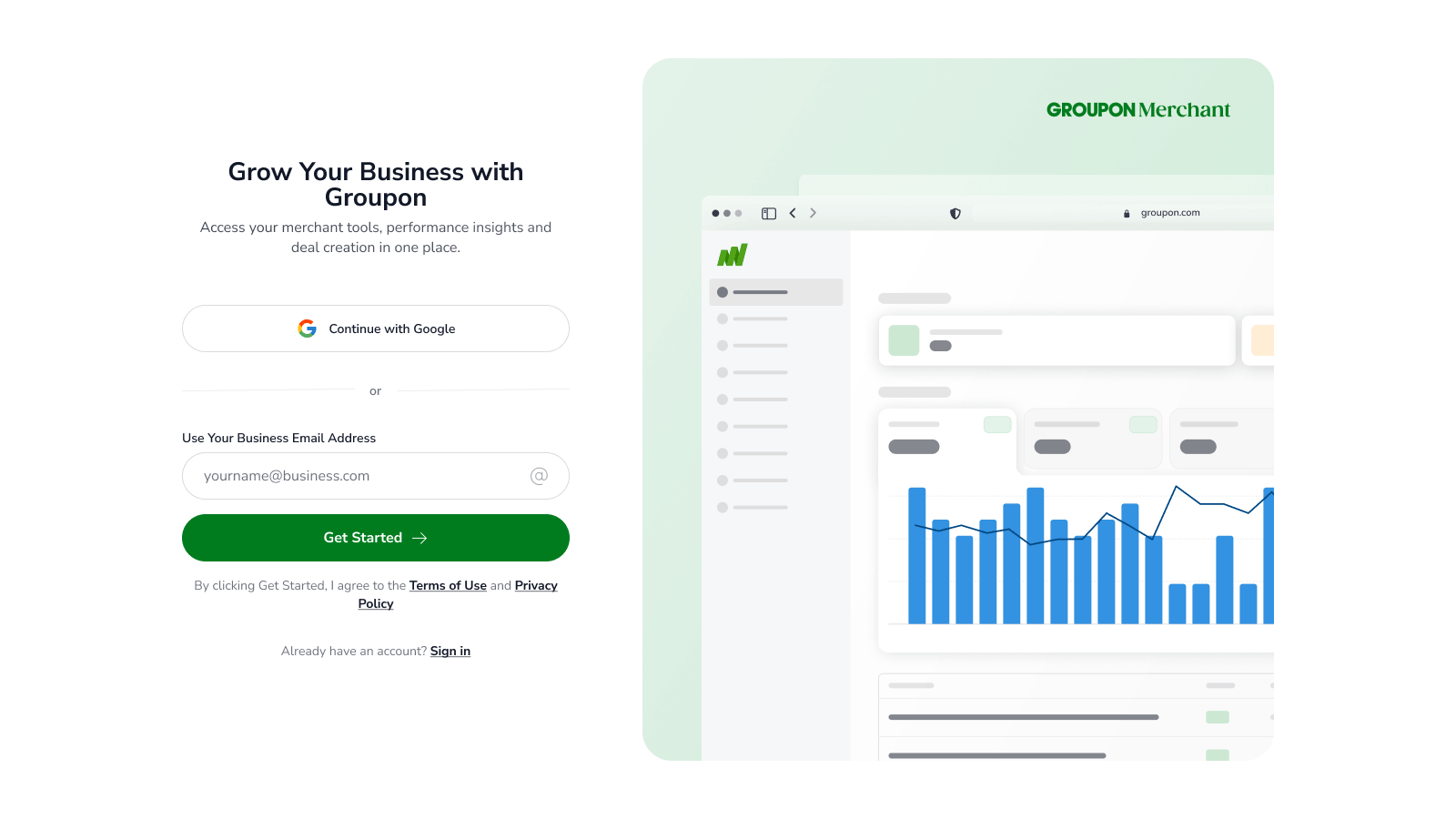
Groupon’s self-service onboarding allows merchants to create and launch deals without sales assistance. While the channel generated strong volume, the experience was complex and difficult for new merchants to navigate.
The existing flow required merchants to define pricing, structure deals, understand compliance rules, and write marketing content before they could even preview their offer. This created friction, confusion, and a high number of incomplete or low-quality submissions.
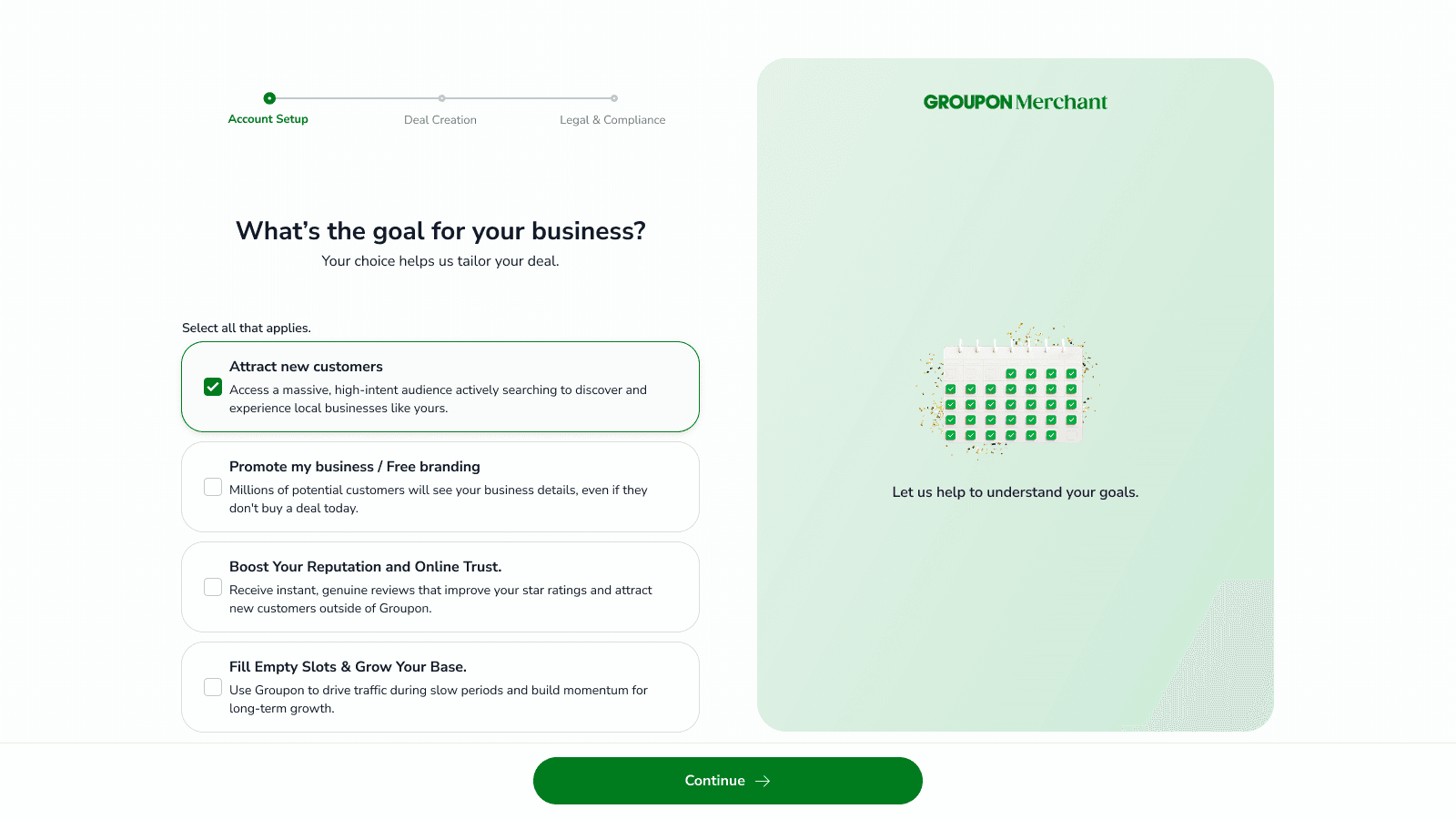
I worked on redesigning the onboarding experience to shift the mental model from building a deal from scratch to reviewing and improving an AI-generated draft. The new flow introduces structured guidance, progressive onboarding, and real-time guardrails to help merchants launch successful deals faster.
The goal was to create an experience that feels guided, trustworthy, and scalable while supporting Groupon’s merchant acquisition strategy.
Client
Groupon
Timeline
2025–2026
Tools used
Figma
Cursor
ChatGPT
NotebookLM
Google Analytics
Tableau

Clarity
Jitter
Github
Vercel
Problem
Self-service onboarding was designed to allow merchants to launch deals independently, but in practice the experience was difficult to complete successfully.
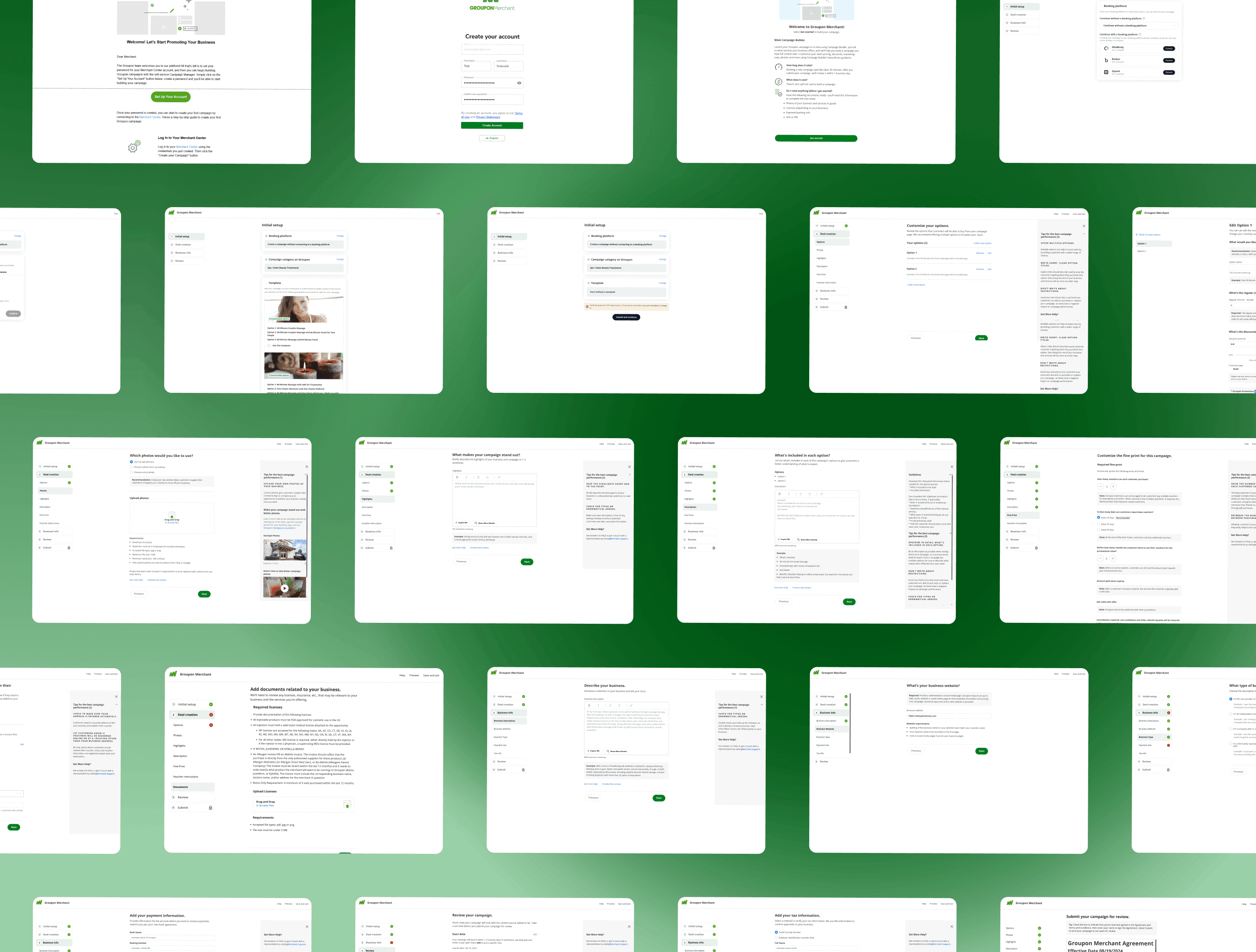
The flow contained more than twenty steps and required merchants to make complex decisions about pricing, service structure, and compliance resulting in 40+ minutes in average to complete the flow. Many merchants lacked the expertise needed to create high-performing deals, which often resulted in incomplete submissions, deal revisions, or manual intervention from internal teams.
This created friction on both sides. Merchants struggled to launch deals confidently, while internal teams had to spend significant time reviewing, correcting, and approving submissions.
The challenge was not just simplifying the interface — it required redesigning the system so merchants could succeed without needing deep platform knowledge.
My role
I worked closely with product managers, engineers, and sales representatives to redesign the onboarding experience end-to-end.
My responsibilities included:
Mapping the existing onboarding flow and identifying key friction points
Designing a new AI-assisted deal creation model
Creating interaction patterns for AI guardrails and guidance
Prototyping and testing new flows with merchants
Supporting experiment design and measurement strategy
The goal was to design a system that helps merchants succeed while reducing operational complexity for the platform.
Actions
The redesign focused on three key changes.
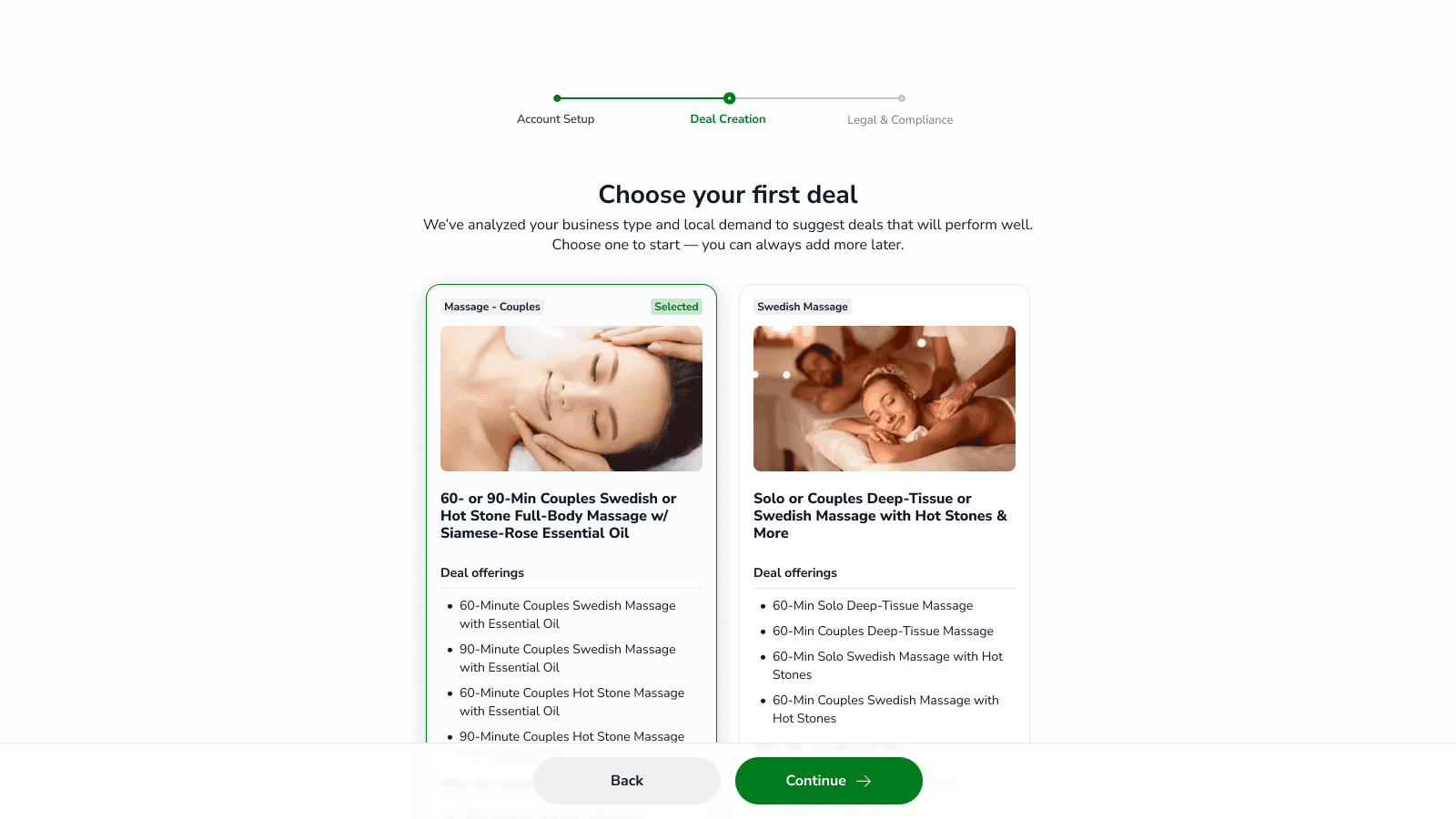
1. AI-Generated Deal Drafts
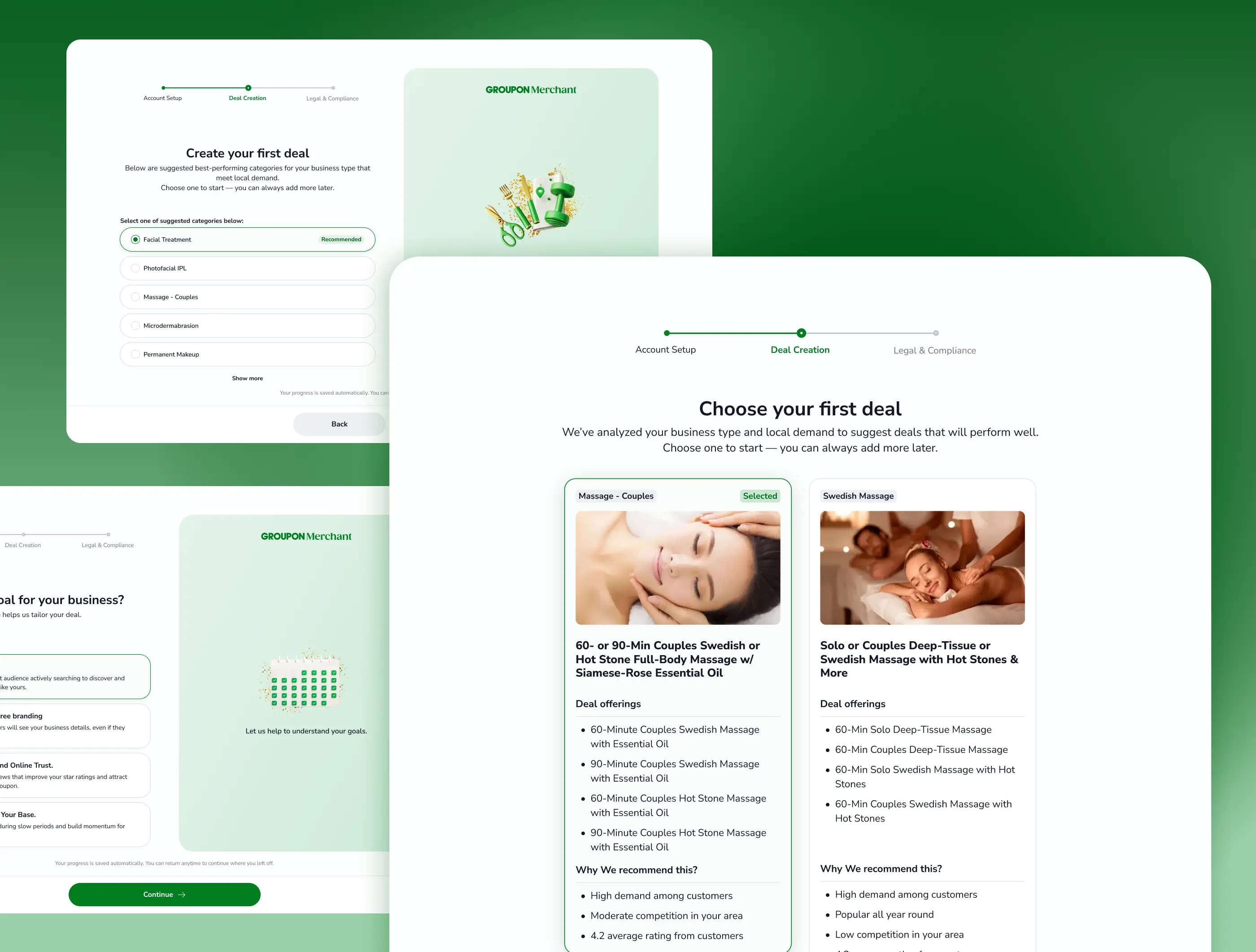
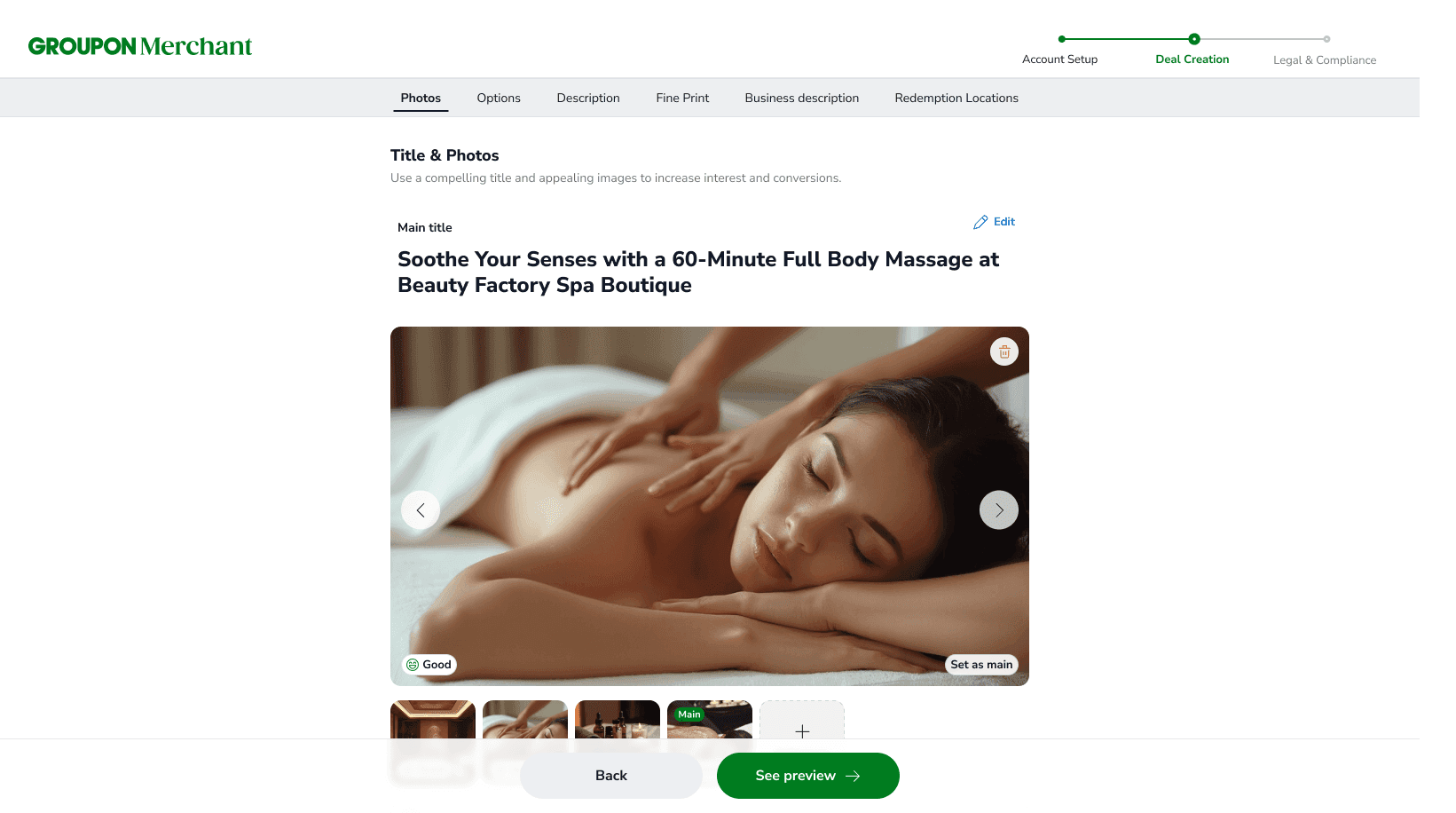
Instead of asking merchants to create a deal from scratch, the system generates a structured draft based on available business information and category playbooks. Merchants review, adjust, and finalize the offer instead of starting from a blank page.
2. Progressive Onboarding
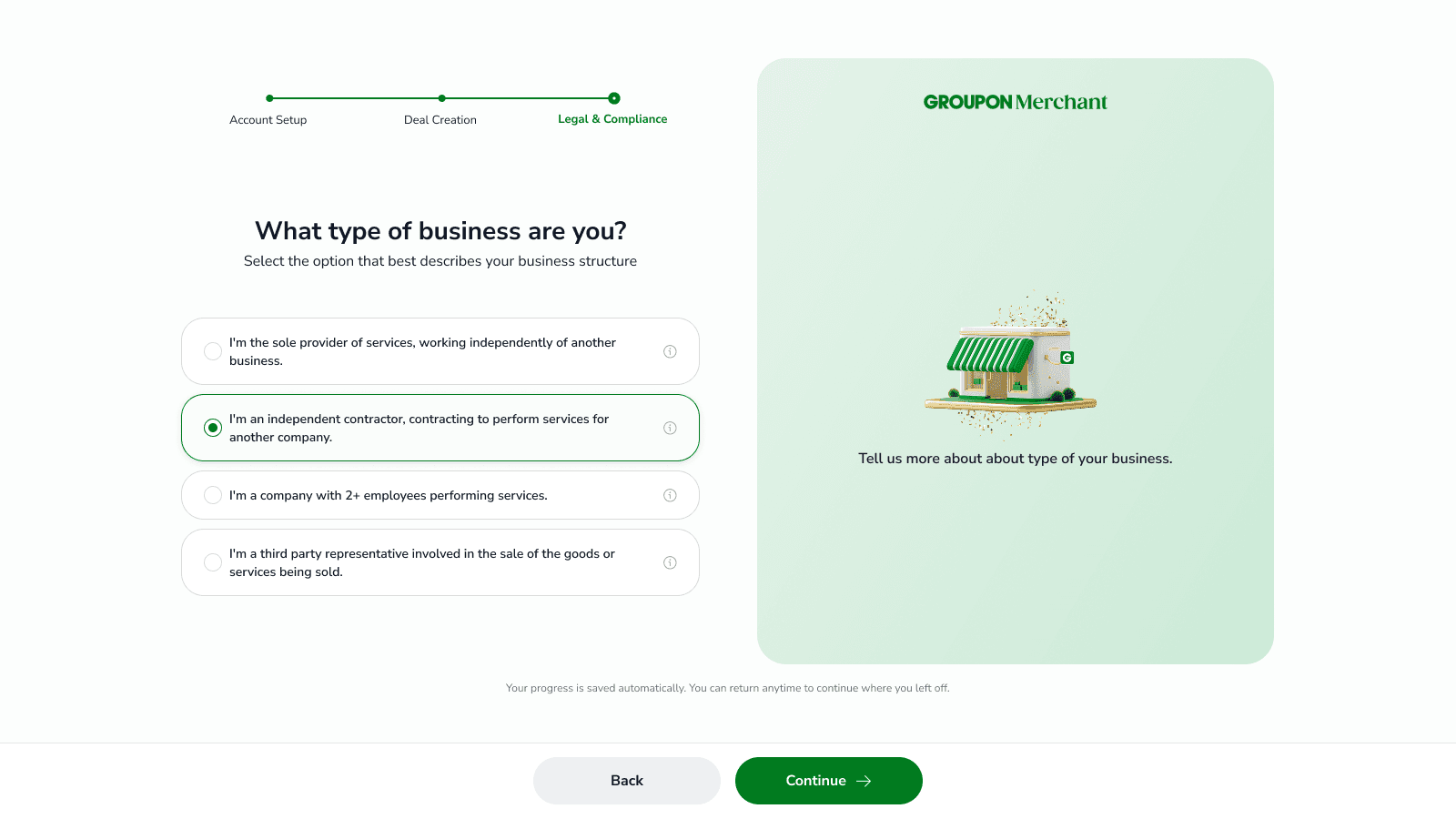
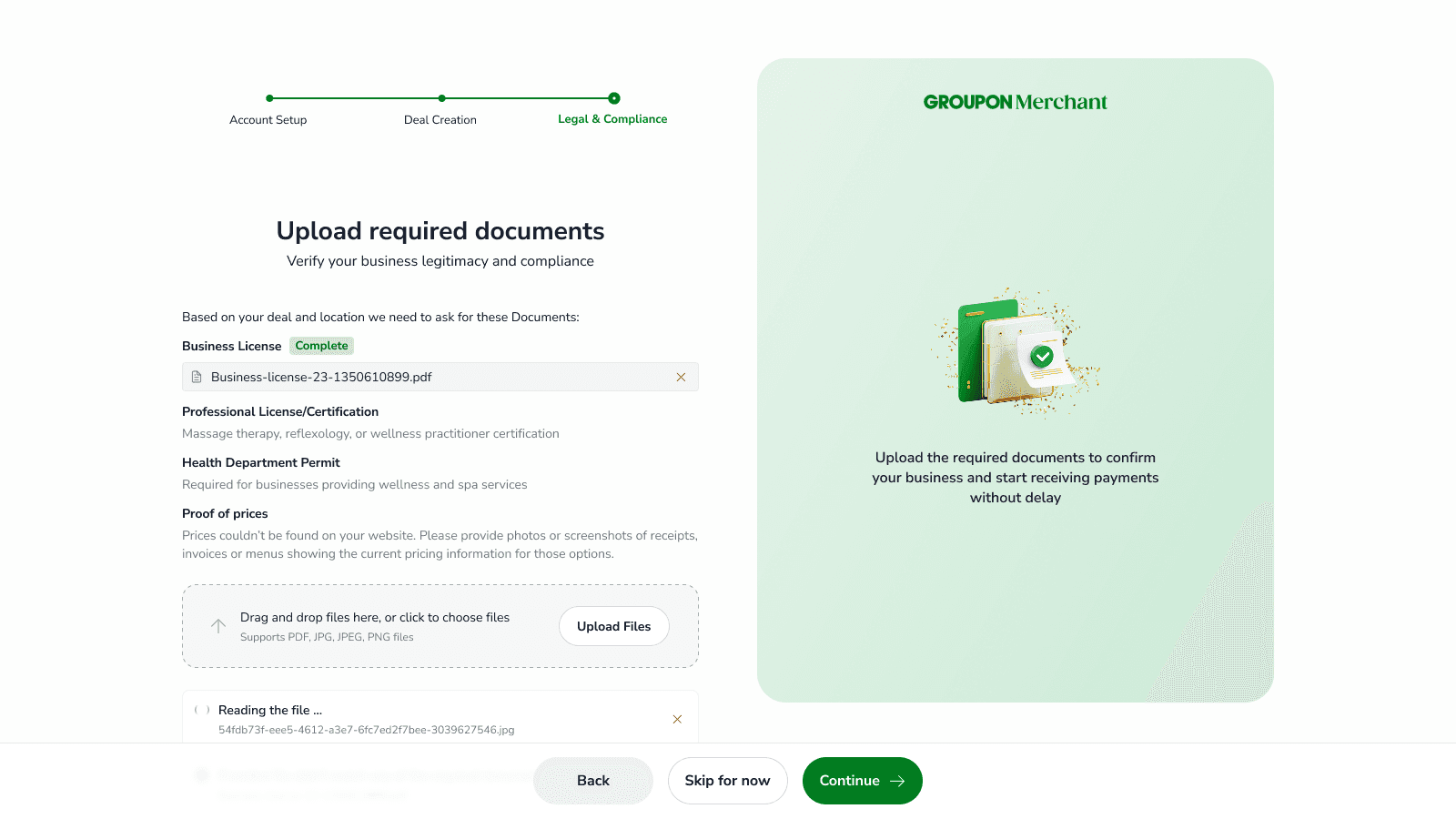
The flow was redesigned to reduce cognitive load. Merchants can preview their deal earlier in the process, while more complex steps such as compliance or financial information are introduced later in the flow.
3. Real-Time Guardrails
To improve deal quality, the system introduces three guidance states:
Hard Block — prevents invalid deals
Soft Warning — suggests improvements
Escalation — flags deals for review when needed
These guardrails help merchants create stronger deals without feeling restricted or overwhelmed.
Results
The redesigned onboarding experience aims to improve merchant activation and deal quality by guiding merchants through a structured process instead of leaving them to figure out the platform on their own.
User testing showed strong preference for the guided flow and significantly reduced confusion around deal structure and pricing.
The new system introduces measurable improvements across several areas, including onboarding completion, deal quality, and time-to-launch. Final metrics will be validated through controlled A/B testing after rollout.
Learnings
Designing AI-assisted product experiences requires more than automation. It requires trust.
Merchants need to understand why the system makes suggestions, when it enforces rules, and when human review is involved. Clear guidance and transparent guardrails are essential to make AI feel helpful rather than restrictive.
This project reinforced an important principle: improving complex onboarding experiences often means redesigning the system behind the interface, not just the screens.
Transforming Self-Service Onboarding into an AI-Guided Activation Engine
Overview
Groupon’s self-service onboarding allows merchants to create and launch deals without sales assistance. While the channel generated strong volume, the experience was complex and difficult for new merchants to navigate.
The existing flow required merchants to define pricing, structure deals, understand compliance rules, and write marketing content before they could even preview their offer. This created friction, confusion, and a high number of incomplete or low-quality submissions.
I worked on redesigning the onboarding experience to shift the mental model from building a deal from scratch to reviewing and improving an AI-generated draft. The new flow introduces structured guidance, progressive onboarding, and real-time guardrails to help merchants launch successful deals faster.
The goal was to create an experience that feels guided, trustworthy, and scalable while supporting Groupon’s merchant acquisition strategy.
Client
Groupon
Timeline
2025–2026
Tools used
Figma
Cursor
ChatGPT
NotebookLM
Google Analytics
Tableau
Clarity
Jitter
Github
Vercel
Problem
Self-service onboarding was designed to allow merchants to launch deals independently, but in practice the experience was difficult to complete successfully.
The flow contained more than twenty steps and required merchants to make complex decisions about pricing, service structure, and compliance resulting in 40+ minutes in average to complete the flow. Many merchants lacked the expertise needed to create high-performing deals, which often resulted in incomplete submissions, deal revisions, or manual intervention from internal teams.
This created friction on both sides. Merchants struggled to launch deals confidently, while internal teams had to spend significant time reviewing, correcting, and approving submissions.
The challenge was not just simplifying the interface — it required redesigning the system so merchants could succeed without needing deep platform knowledge.
My role
I worked closely with product managers, engineers, and sales representatives to redesign the onboarding experience end-to-end.
My responsibilities included:
Mapping the existing onboarding flow and identifying key friction points
Designing a new AI-assisted deal creation model
Creating interaction patterns for AI guardrails and guidance
Prototyping and testing new flows with merchants
Supporting experiment design and measurement strategy
The goal was to design a system that helps merchants succeed while reducing operational complexity for the platform.
Actions
The redesign focused on three key changes.
1. AI-Generated Deal Drafts
Instead of asking merchants to create a deal from scratch, the system generates a structured draft based on available business information and category playbooks. Merchants review, adjust, and finalize the offer instead of starting from a blank page.
2. Progressive Onboarding
The flow was redesigned to reduce cognitive load. Merchants can preview their deal earlier in the process, while more complex steps such as compliance or financial information are introduced later in the flow.
3. Real-Time Guardrails
To improve deal quality, the system introduces three guidance states:
Hard Block — prevents invalid deals
Soft Warning — suggests improvements
Escalation — flags deals for review when needed
These guardrails help merchants create stronger deals without feeling restricted or overwhelmed.
Results
The redesigned onboarding experience aims to improve merchant activation and deal quality by guiding merchants through a structured process instead of leaving them to figure out the platform on their own.
User testing showed strong preference for the guided flow and significantly reduced confusion around deal structure and pricing.
The new system introduces measurable improvements across several areas, including onboarding completion, deal quality, and time-to-launch. Final metrics will be validated through controlled A/B testing after rollout.
Learnings
Designing AI-assisted product experiences requires more than automation. It requires trust.
Merchants need to understand why the system makes suggestions, when it enforces rules, and when human review is involved. Clear guidance and transparent guardrails are essential to make AI feel helpful rather than restrictive.
This project reinforced an important principle: improving complex onboarding experiences often means redesigning the system behind the interface, not just the screens.
Transforming Self-Service Onboarding into an AI-Guided Activation Engine
Overview
Groupon’s self-service onboarding allows merchants to create and launch deals without sales assistance. While the channel generated strong volume, the experience was complex and difficult for new merchants to navigate.
The existing flow required merchants to define pricing, structure deals, understand compliance rules, and write marketing content before they could even preview their offer. This created friction, confusion, and a high number of incomplete or low-quality submissions.
I worked on redesigning the onboarding experience to shift the mental model from building a deal from scratch to reviewing and improving an AI-generated draft. The new flow introduces structured guidance, progressive onboarding, and real-time guardrails to help merchants launch successful deals faster.
The goal was to create an experience that feels guided, trustworthy, and scalable while supporting Groupon’s merchant acquisition strategy.
Client
Groupon
Timeline
2025–2026
Tools used
Figma
Cursor
ChatGPT
NotebookLM
Google Analytics
Tableau
Clarity
Jitter
Github
Vercel
Problem
Self-service onboarding was designed to allow merchants to launch deals independently, but in practice the experience was difficult to complete successfully.
The flow contained more than twenty steps and required merchants to make complex decisions about pricing, service structure, and compliance resulting in 40+ minutes in average to complete the flow. Many merchants lacked the expertise needed to create high-performing deals, which often resulted in incomplete submissions, deal revisions, or manual intervention from internal teams.
This created friction on both sides. Merchants struggled to launch deals confidently, while internal teams had to spend significant time reviewing, correcting, and approving submissions.
The challenge was not just simplifying the interface — it required redesigning the system so merchants could succeed without needing deep platform knowledge.
My role
I worked closely with product managers, engineers, and sales representatives to redesign the onboarding experience end-to-end.
My responsibilities included:
Mapping the existing onboarding flow and identifying key friction points
Designing a new AI-assisted deal creation model
Creating interaction patterns for AI guardrails and guidance
Prototyping and testing new flows with merchants
Supporting experiment design and measurement strategy
The goal was to design a system that helps merchants succeed while reducing operational complexity for the platform.
Actions
The redesign focused on three key changes.
1. AI-Generated Deal Drafts
Instead of asking merchants to create a deal from scratch, the system generates a structured draft based on available business information and category playbooks. Merchants review, adjust, and finalize the offer instead of starting from a blank page.
2. Progressive Onboarding
The flow was redesigned to reduce cognitive load. Merchants can preview their deal earlier in the process, while more complex steps such as compliance or financial information are introduced later in the flow.
3. Real-Time Guardrails
To improve deal quality, the system introduces three guidance states:
Hard Block — prevents invalid deals
Soft Warning — suggests improvements
Escalation — flags deals for review when needed
These guardrails help merchants create stronger deals without feeling restricted or overwhelmed.
Results
The redesigned onboarding experience aims to improve merchant activation and deal quality by guiding merchants through a structured process instead of leaving them to figure out the platform on their own.
User testing showed strong preference for the guided flow and significantly reduced confusion around deal structure and pricing.
The new system introduces measurable improvements across several areas, including onboarding completion, deal quality, and time-to-launch. Final metrics will be validated through controlled A/B testing after rollout.
Learnings
Designing AI-assisted product experiences requires more than automation. It requires trust.
Merchants need to understand why the system makes suggestions, when it enforces rules, and when human review is involved. Clear guidance and transparent guardrails are essential to make AI feel helpful rather than restrictive.
This project reinforced an important principle: improving complex onboarding experiences often means redesigning the system behind the interface, not just the screens.