Redesigning Test Case Management for Structured QA Workflows
Overview
The Test Module in juno.one supports software testing by enabling teams to create, manage, and execute test cases.
The original experience lacked structure, making it difficult to organize tests, track execution, and connect results with issues. This led to inefficiencies in QA workflows and limited visibility across teams.
I led the end-to-end redesign of the module, focusing on structuring test management, simplifying execution, and improving traceability between tests and issues.
Client
juno.one
Timeline
2023
Tools used
Figma
Miro
Illustrator
Problem
The existing module lacked a clear system for managing test cases and executing tests.
Test cases were difficult to organize, and there was no structured hierarchy to group them effectively. Execution flows were unclear, making it harder for QA teams to track progress and outcomes.
Failed tests were not properly connected to issues, which slowed down bug tracking and resolution.
Overall, the module did not support a reliable or scalable QA workflow.
My role
I was responsible for redesigning the test module end-to-end.
My responsibilities included:
• Redefining test case structure and hierarchy
• Designing test execution flows and interaction patterns
• Connecting test results with issue tracking
• Improving usability for QA workflows within system constraints
• Aligning the module with the broader product and design system
The goal was to create a system that is structured, efficient, and tightly integrated with development workflows.
Actions
The redesign focused on three key areas.
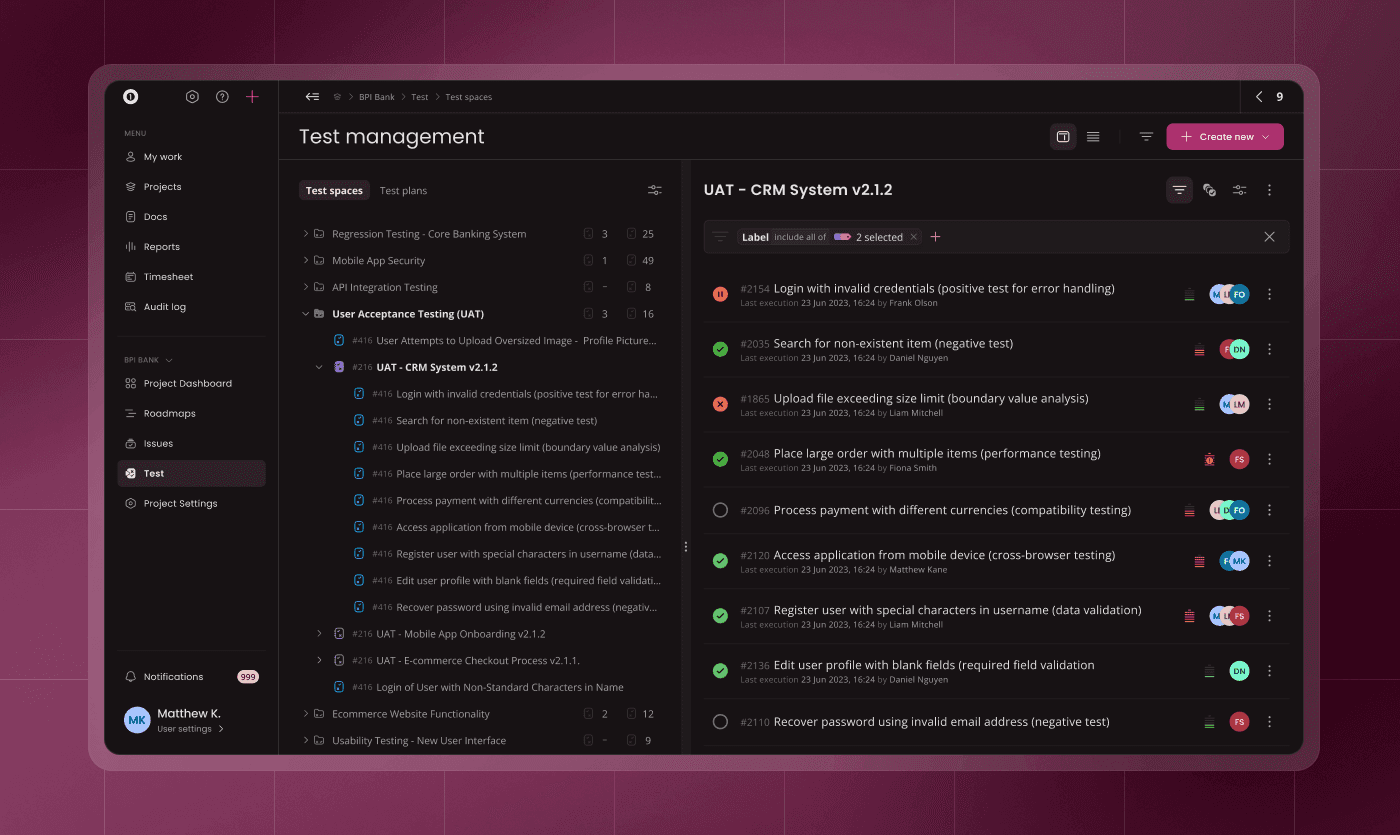
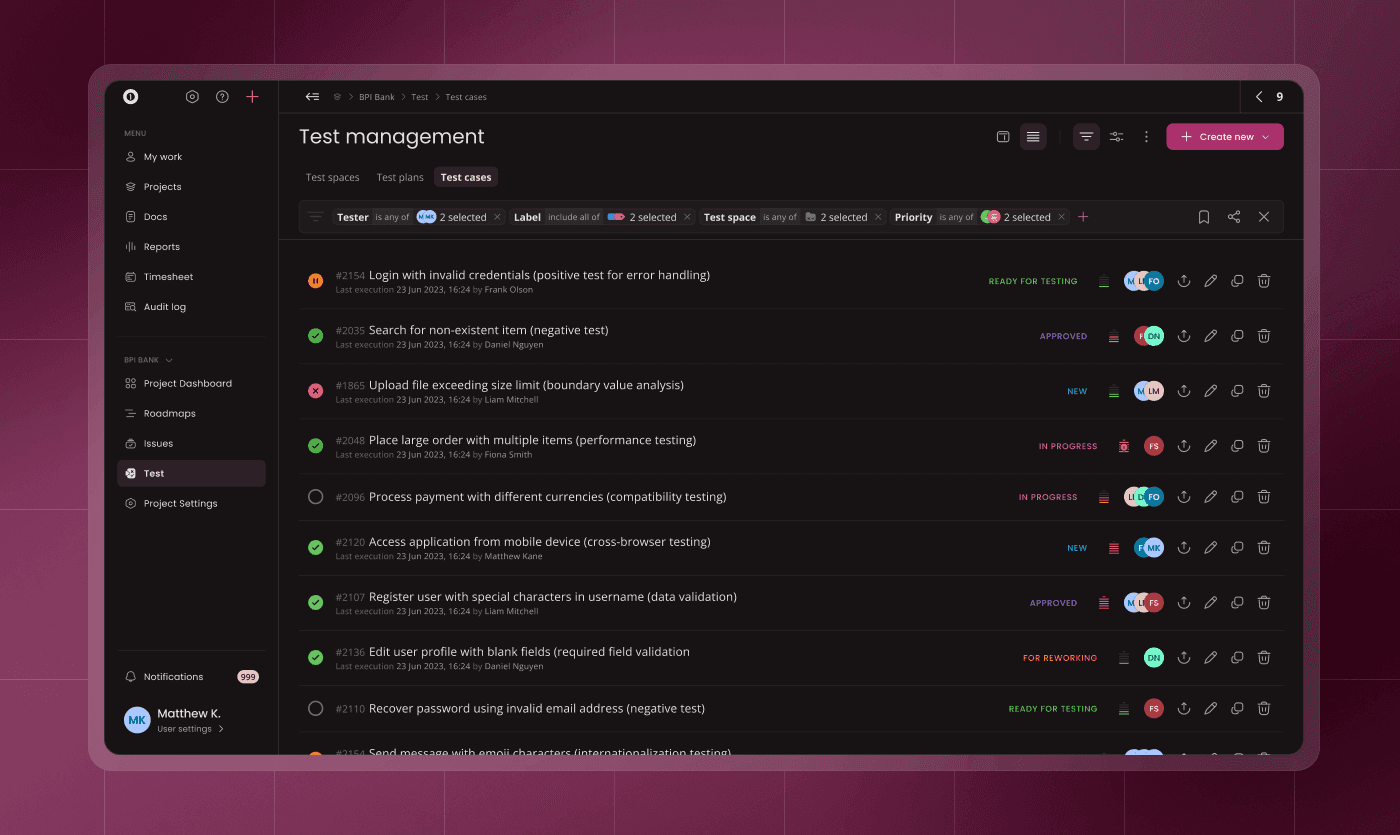
1. Structuring Test Case Management
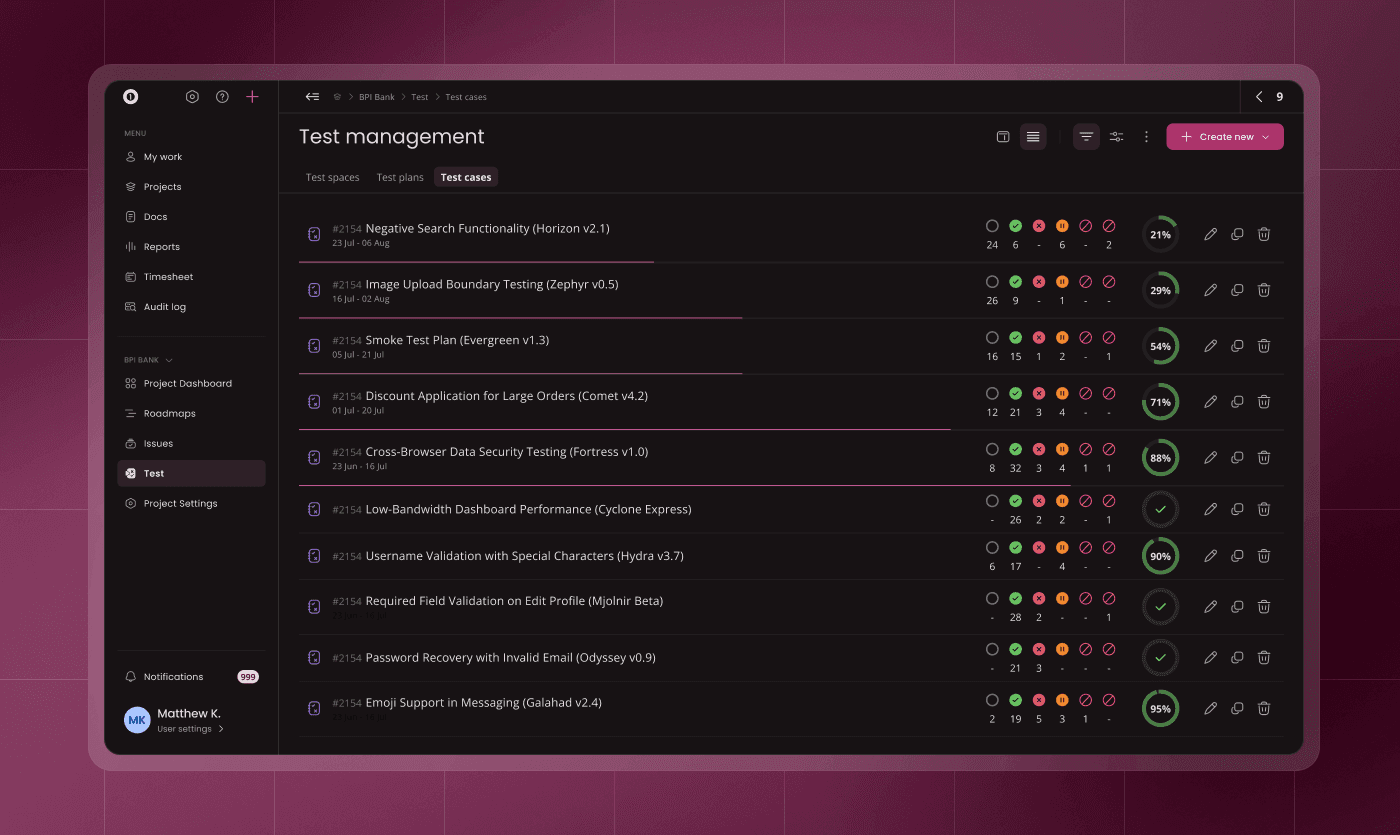
I introduced a tree-based hierarchy for organizing test cases and test suites.
This allowed teams to group tests logically and navigate large sets of test cases more easily, improving clarity and scalability.
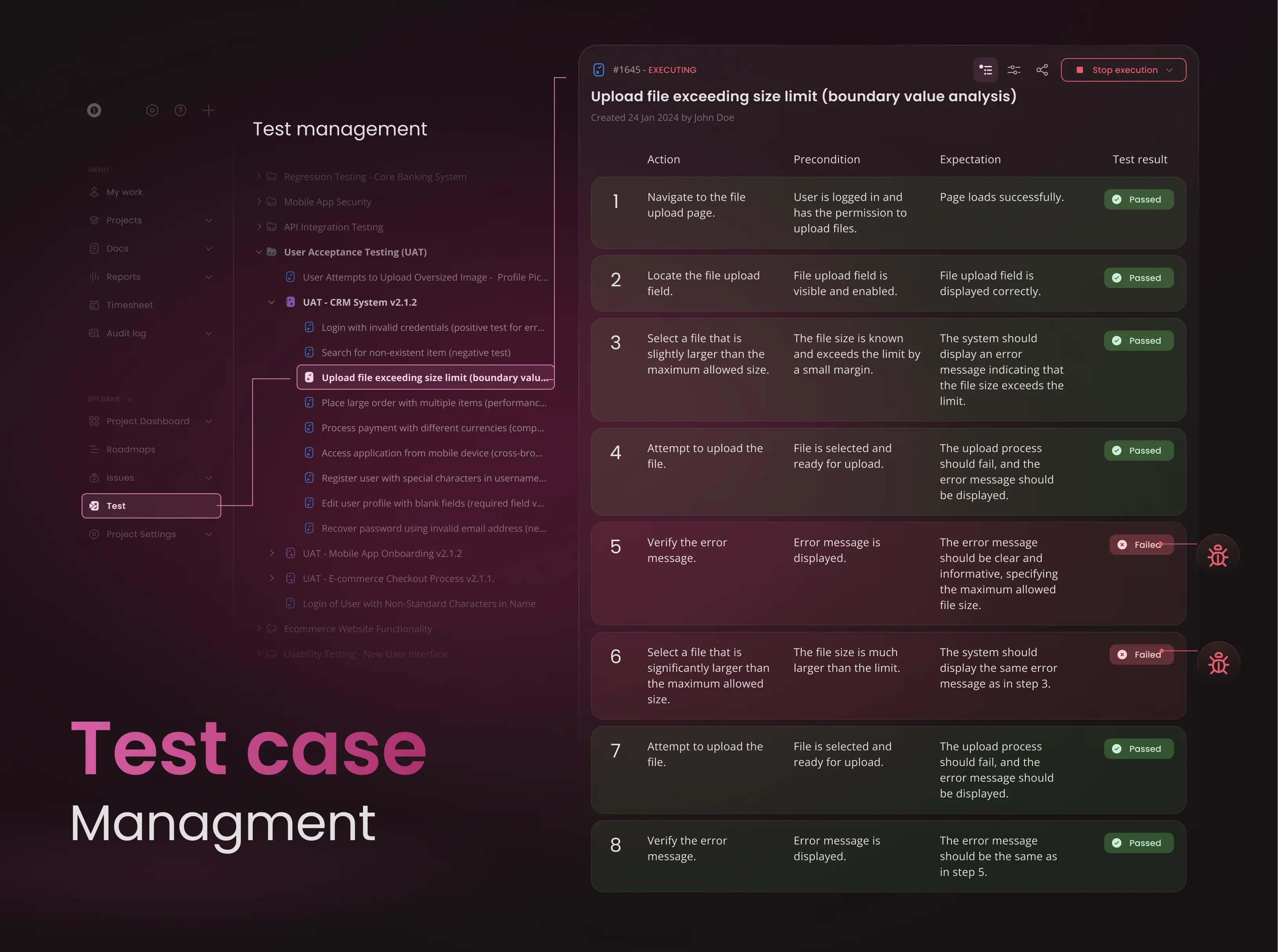
2. Streamlining Test Execution
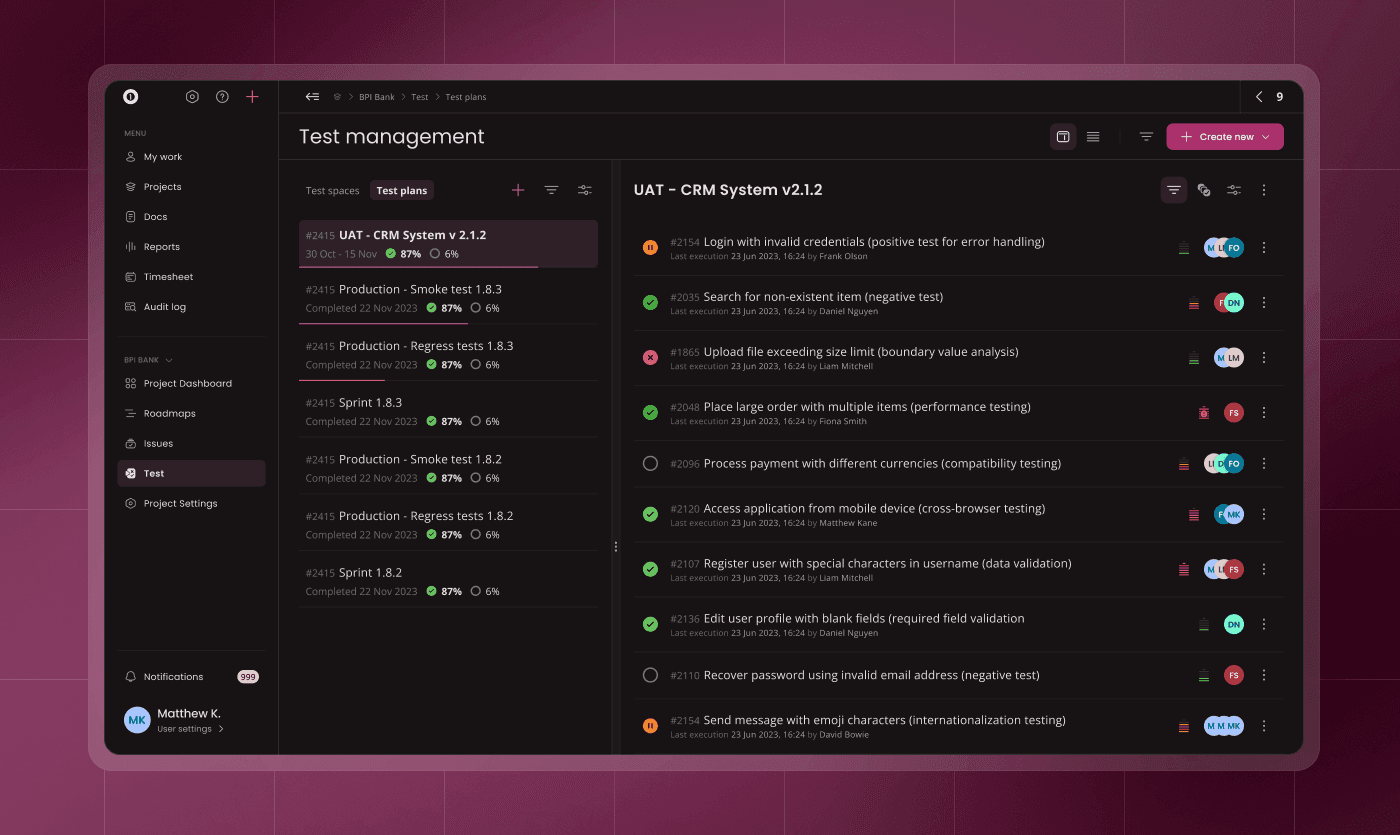
I designed a clear and efficient execution flow with pass/fail states and execution history.
Testers can quickly run tests, track results, and review past executions, making the QA process more structured and repeatable.
3. Connecting Tests with Issues
To improve traceability, I integrated test cases with the issue management system.
Failed tests can be directly linked to issues, enabling faster bug reporting and resolution. This created a seamless workflow between QA and development teams.
Results
The redesigned module significantly improved QA workflow efficiency and visibility.
Test cases became easier to manage, execution flows more intuitive, and bug tracking more connected.
Teams were able to run tests more consistently, identify issues faster, and collaborate more effectively across roles.
The module now supports a structured and scalable testing process, aligned with modern software development needs.
Learnings
Designing for QA workflows requires a strong focus on structure, repeatability, and traceability.
Working within a legacy system and existing issue architecture required careful alignment, but also enabled tighter integration between testing and development.
This project reinforced the importance of connecting tools and workflows into a single coherent system, rather than treating them as separate features.
Redesigning Test Case Management for Structured QA Workflows
Overview
The Test Module in juno.one supports software testing by enabling teams to create, manage, and execute test cases.
The original experience lacked structure, making it difficult to organize tests, track execution, and connect results with issues. This led to inefficiencies in QA workflows and limited visibility across teams.
I led the end-to-end redesign of the module, focusing on structuring test management, simplifying execution, and improving traceability between tests and issues.
Client
juno.one
Timeline
2023
Tools used
Figma
Miro
Illustrator
Problem
The existing module lacked a clear system for managing test cases and executing tests.
Test cases were difficult to organize, and there was no structured hierarchy to group them effectively. Execution flows were unclear, making it harder for QA teams to track progress and outcomes.
Failed tests were not properly connected to issues, which slowed down bug tracking and resolution.
Overall, the module did not support a reliable or scalable QA workflow.
My role
I was responsible for redesigning the test module end-to-end.
My responsibilities included:
• Redefining test case structure and hierarchy
• Designing test execution flows and interaction patterns
• Connecting test results with issue tracking
• Improving usability for QA workflows within system constraints
• Aligning the module with the broader product and design system
The goal was to create a system that is structured, efficient, and tightly integrated with development workflows.
Actions
The redesign focused on three key areas.
1. Structuring Test Case Management
I introduced a tree-based hierarchy for organizing test cases and test suites.
This allowed teams to group tests logically and navigate large sets of test cases more easily, improving clarity and scalability.
2. Streamlining Test Execution
I designed a clear and efficient execution flow with pass/fail states and execution history.
Testers can quickly run tests, track results, and review past executions, making the QA process more structured and repeatable.
3. Connecting Tests with Issues
To improve traceability, I integrated test cases with the issue management system.
Failed tests can be directly linked to issues, enabling faster bug reporting and resolution. This created a seamless workflow between QA and development teams.
Results
The redesigned module significantly improved QA workflow efficiency and visibility.
Test cases became easier to manage, execution flows more intuitive, and bug tracking more connected.
Teams were able to run tests more consistently, identify issues faster, and collaborate more effectively across roles.
The module now supports a structured and scalable testing process, aligned with modern software development needs.
Learnings
Designing for QA workflows requires a strong focus on structure, repeatability, and traceability.
Working within a legacy system and existing issue architecture required careful alignment, but also enabled tighter integration between testing and development.
This project reinforced the importance of connecting tools and workflows into a single coherent system, rather than treating them as separate features.